- Why Summer Storms Are So Hard on Trees
- 1. Schedule a Professional Pruning Before Storm Season
- 2. Clear Deadwood and Hanging Limbs Early
- 3. Cable or Brace Weak and Split Trunks
- 4. Look at the Base and the Root Zone
- 5. Have a Certified Arborist Assess Your High-Risk Trees
- What to Do When a Storm Does Hit
Summer storms in Lancaster County have a way of showing up fast and hitting hard. One humid afternoon turns into straight-line winds, heavy rain, and the kind of gusts that snap limbs and uproot whole trees. The frustrating part is that most of the trees we’re called out to clean up after a storm were showing warning signs long before the sky turned dark. A little preparation now is far cheaper, and safer, than an emergency removal later.
Here are five things you can do before the next storm to give your trees, and your property, the best chance of coming through intact.
Why Summer Storms Are So Hard on Trees
A tree in full summer canopy acts like a sail. All those leaves catch wind that would pass harmlessly through a bare winter tree. Add saturated soil from heavy rain, which loosens the root anchor, and you have the exact conditions that bring trees down. Lancaster sits in a part of Pennsylvania that regularly sees fast-moving thunderstorms and the occasional microburst, so the goal isn’t to storm-proof a tree completely, it’s to remove the weak points a storm will find first.
1. Schedule a Professional Pruning Before Storm Season
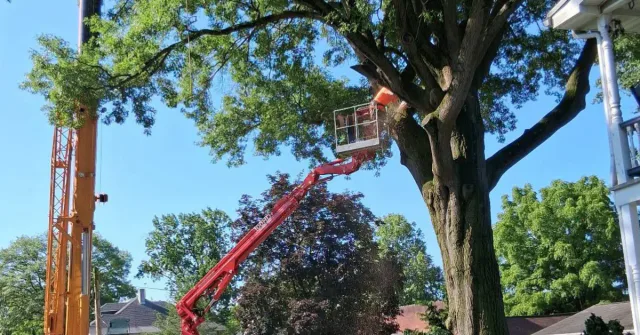
Thinning the canopy so wind can move through it is one of the most effective things you can do. A trained crew removes deadwood, crossing branches, and overextended limbs that act as levers in high wind. Just as important is what a good arborist won’t do: “topping” a tree, or hacking back the crown, actually makes it more dangerous over time. The International Society of Arboriculture explains why proper structural pruning beats aggressive cutting every time.
2. Clear Deadwood and Hanging Limbs Early
Dead limbs are the first thing to come down in a storm, and they don’t care what’s underneath them, a roof, a car, or a person. If you can see bare, brittle branches with no leaves in summer, or limbs that are cracked or hung up in the canopy, treat those as priorities. Deadwood removal is low-cost compared to the damage a falling limb causes.
3. Cable or Brace Weak and Split Trunks
Many mature trees have two or more main stems growing from a single point, often with bark pinched between them. That “included bark” is a structural weak spot that tends to split right down the middle in a storm. A professional can install cabling or bracing hardware that supports those unions and buys the tree years of extra life. This is not a DIY job, improper hardware can do more harm than the split it was meant to prevent.
4. Look at the Base and the Root Zone
The trouble that brings whole trees down usually starts at the ground. Walk your trees and look for a fresh lean, soil heaving or cracking on one side of the trunk, exposed or severed roots, or mushrooms and soft, decayed wood at the base. Any of these means the root system may already be compromised, and no amount of pruning up top will fix a failing anchor below.
5. Have a Certified Arborist Assess Your High-Risk Trees
If you have large trees near your house, driveway, or power lines, it’s worth having a professional evaluate them before storm season rather than after. Penn State Extension offers solid guidance on building storm-resistant landscapes, and a hands-on assessment goes a step further by catching decay, root issues, and structural defects that aren’t obvious from the ground.
What to Do When a Storm Does Hit
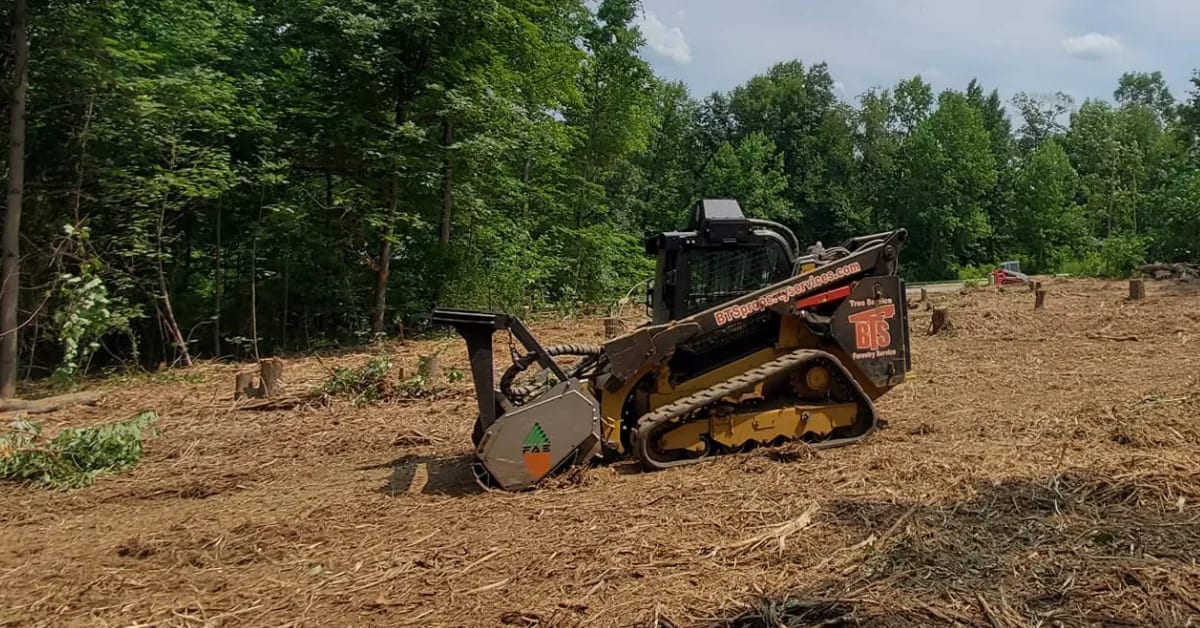
Even a well-cared-for tree can lose a limb in a severe storm. If that happens, stay well clear of any downed or hanging limbs near power lines and never try to cut large storm-damaged wood yourself, it’s under tension and can move unpredictably. That’s what emergency crews are for. At BTS Tree Services we’re available 24/7 for storm response across Lancaster County, with crane-assisted removal for the trees that are too big or too dangerous to handle any other way.